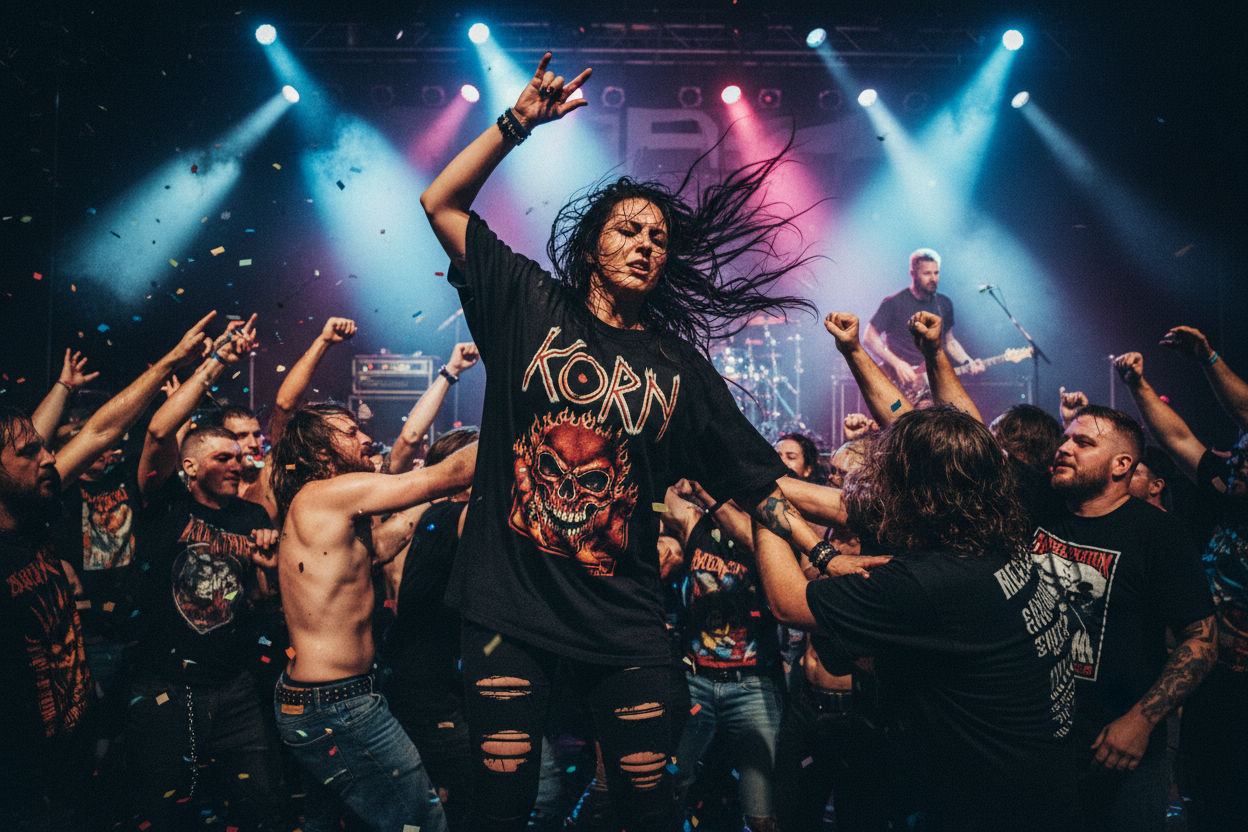
Nu-metal never died. It just went quiet for a while. The genre that defined a generation of kids who didn't quite fit into either the pop world or the underground metal scene — who wanted the aggression of metal, the groove of hip-hop, and the emotional rawness of grunge all at once — spent about fifteen years being dismissed, mocked, and written off as a guilty pleasure. And then, slowly and then all at once, it came roaring back. Not as nostalgia. As something that still means something.
Limp Bizkit headlining Download Festival 2026 — their first ever Download headline slot, their only UK show of the year — wasn't a legacy booking. It was a statement. Hollywood Undead are filling bigger rooms than ever. Electric Callboy are pulling festival crowds that would have seemed impossible a decade ago. The Apex Stage at Donington this summer is going to be absolutely biblical, and the people losing their minds in that crowd aren't all in their thirties reliving their youth. A lot of them are teenagers who found the music on YouTube and decided it hit harder than anything being made now. They're right.
Nu-metal didn't come back because of nostalgia. It came back because the world gave it a reason to.
Why The Revival Is Real
Every genre revival gets dismissed as nostalgia until it's too big to dismiss. The people calling the nu-metal comeback a retro trend are the same people who said the same thing about the 80s metal revival in the 2000s, the punk revival in the 90s, and every other cycle of heavy music that turned out to be a genuine cultural reset rather than a trip down memory lane.
Here's the thing about nu-metal that made it connect in the late 90s and early 2000s: it was music for people who felt like outsiders in their own skin. Angry, confused, a bit ridiculous, and entirely serious about it at the same time. Sound familiar? The mid-2020s have delivered plenty of reasons to feel exactly like that, and a generation of young fans who never heard it the first time around are finding it and recognising something in it that speaks directly to where they are.
Add to that the way streaming algorithms have collapsed genre walls — a sixteen-year-old discovering Deftones via a playlist is two clicks from Korn, three clicks from Slipknot, and suddenly they've fallen into a sound that nobody told them they were supposed to be past. The genre gate-keeping that helped bury nu-metal critically in the 2010s simply doesn't work the same way any more. The music is finding its audience without asking permission.
The Aesthetic That Came With It
Nu-metal didn't just have a sound. It had a look. And that look is back in a way that anyone paying attention to streetwear, festival fashion, and the wider cultural mood cannot have missed. The visual language of the era — oversized everything, heavy graphic tees, chains, cargo, washed-out colour palettes sitting alongside aggressive black-on-black — has been filtering back through fashion for a couple of years now. What started in niche corners of the internet is now showing up at festivals, on high streets, and increasingly on the backs of people who weren't even born when the genre peaked.
The iconography is distinct and immediately readable. Blocky typefaces with industrial weight. Tribal and barbed wire motifs. Stark, high-contrast imagery that sits somewhere between heavy metal illustration and urban graphic design. Colour palettes built on black, washed grey, blood red, and the occasional jarring neon. It's a visual world with its own rules, and those rules are different enough from anything else in rock that you clock it immediately.
The nu-metal aesthetic was always more than a trend — it was a visual identity for people who wanted to look as loud as they felt.
What Nu-Metal Design Looks Like On a Shirt
At Moshed, we've been watching this shift closely — because the design language of nu-metal translates to clothing in a way that very few other genres match. The imagery is bold, the placement is confident, and when it's done well it carries a genuine sense of weight and intention rather than just being a print on a blank tee.
So what does nu-metal-inspired design actually look like in practice? Here's where our heads are at:
- Oversized back prints with fractured, industrial typography. Think big, broken, slightly corrupted letterforms — the kind that look like they've been put through a photocopier fourteen times or stamped onto metal plate. The back print is nu-metal's natural home. Front-of-chest is a statement; the back is a world.
- Barbed wire and chain motifs done with intent. The barbed wire graphic became a cliché because it was everywhere — but when it's handled with actual craft, as a structural design element rather than clip art, it still carries real menace. Chain imagery works the same way: it's about constraint, tension, the feeling of something held under pressure.
- Washed, distressed colourways on the garment itself. Nu-metal wasn't clean. The fabric should reflect that. Acid wash, over-dye, deliberately uneven bleaching — the kind of finish that makes a shirt look like it's already been through something.
- Tribal and angular geometry used sparingly. The tribal tattoo aesthetic of the era has aged badly when used literally — but the underlying design language of angular, interlocking geometry is actually strong when it's abstracted and applied with restraint. Pattern as texture rather than motif.
- High-contrast photographic imagery with heavy treatment. Dark, pushed, grainy — the kind of image processing that strips a photograph back to its most brutal essentials. Faces in shadow. Architecture at night. The visual equivalent of a drop-tuned guitar.
The New Generation Is Writing Its Own Rules
One of the most interesting things about the current revival is that the new audience isn't just recreating the original aesthetic — they're remixing it. The kids wearing nu-metal-influenced clothing in 2026 are bringing in references from streetwear, from Y2K fashion, from anime, from visual kei, from Japanese graphic design traditions that were always part of the genre's international appeal even when nobody talked about it. The result is something that has the bones of the original but doesn't look like a costume.
That's the version we're interested in at Moshed. Not a revival as tribute act. A revival as living thing — taking the visual DNA of an era that meant something and building it into something that belongs to now. The energy is the same. The anger is the same. The feeling that you don't quite fit and you're absolutely fine with that — very much the same. But the clothes should look like they were made in 2026, not dug out of a box from 2002.
The best revival isn't recreation. It's translation.
Where This Is Going
The nu-metal revival is not a moment. It's a direction. The fact that Limp Bizkit can sell out a Download headline in their only UK appearance of the year, while simultaneously a generation of new acts is carrying the sonic baton forward, tells you this isn't a blip — it's a reestablishment. The genre is in the process of shedding the critical baggage it accumulated and being reassessed on its own terms, by people who don't have a stake in the old critical consensus.
For a brand like Moshed, that's exciting. It means the visual language we've always been drawn to — heavy, graphic, confident, a bit confrontational — has a fresh wave of cultural relevance behind it. It means the things we want to put on shirts are the things people actually want to wear right now, not because we've chased a trend but because we were already living in the same headspace.
Keep your eyes on what we're working on. The drop coming from this direction is going to look exactly like it sounds. Heavy, intentional, and built for the pit.